
LICENSED & INSURED SOUTHERN MARYLAND TREE CARE
Tree Service In Waldorf MD To Protect Your Property
Removal, trimming, storm cleanup, and stump grinding for homes and businesses across Waldorf. Tell us what’s going on and we’ll help determine the next step.
Maryland Licensed
Tree Expert #2376
Fully Insured
Property-conscious work
Family-Owned
Local accountability
Since 2018
Serving Southern Maryland
Free Estimates
Written on-site or by photo
A MIX OF PROPERTY TYPES ACROSS WALDORF
Tree Care Tailored To Your Waldorf MD Property
Waldorf includes established neighborhoods with mature trees close to homes, newer subdivisions with tighter lot lines, managed communities, wooded properties, and commercial sites along Route 301. Before recommending a service, Life & Limb Tree Care considers equipment access, available working space, nearby structures, utility areas, customer access, and how debris can leave the property.

For Homeowners
Tree removal, pruning, crown reduction, stump grinding, and storm cleanup for residential properties, including tighter subdivision lots.
For HOA & Community Properties
Tree work planned around community landscaping guidelines and any property-management requirements that apply.
For Businesses Along Route 301
Commercial tree work planned around business hours, parking areas, customer access, and active entrances.
TREE SERVICES IN YOUR COMMUNITY
Tree Services in Waldorf, MD

Tree Removal
Removal comes into play when a tree is dead, structurally unstable, severely storm-damaged, or in direct conflict with a building project — not as a default answer to every problem. Leonardtown’s narrow side yards, fences, and structures set close to the work area make access planning especially important here, so we evaluate the tree’s condition and distance from buildings and utilities before choosing a method.

Tree Risk Assessment
A new lean, dead branches, cracks, cavities, or fungal growth are common reasons to request an assessment. We evaluate the trunk, canopy, roots, branch unions, nearby structures, vehicles, and utilities before recommending monitoring, pruning, support, treatment, or removal.

Storm-Damaged Tree Response
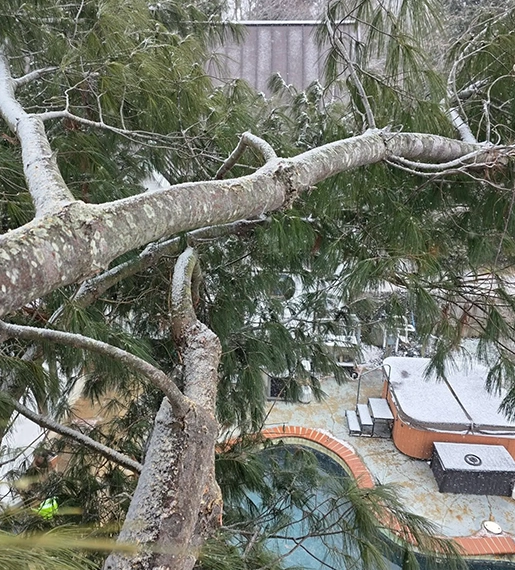
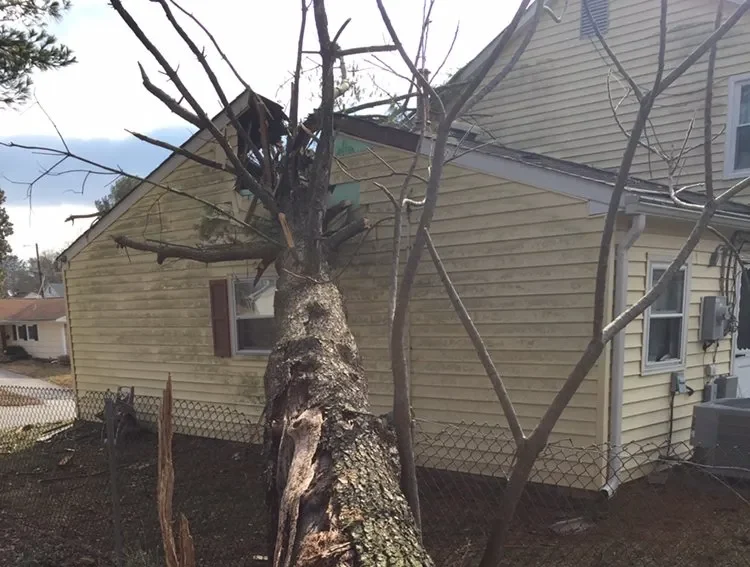
High winds and saturated ground can leave branches hanging over a roof, trees leaning toward structures, or debris blocking access. Once electrical hazards are addressed, we assess whether the job needs branch removal, partial or full removal, cleanup, or follow-up pruning.

Tree Cabling and Bracing
A weak branch union or heavy spreading limb does not always mean removal. Cabling and bracing can add support where it is genuinely appropriate, but only after we evaluate the tree’s overall condition, the weak point, and what sits beneath it.

Tree Trimming and Pruning
Good pruning solves a specific problem instead of removing as much canopy as possible. Depending on the tree, that may include deadwood removal, roof and driveway clearance, reducing interfering limbs, or improving structure around frequently used areas.

Tree Crown Reduction
When selected limbs have become too long, heavy, or close to roofs and driveways, crown reduction can shorten specific branches through proper cuts rather than flattening the canopy. We first check health, branch unions, and how much reduction the tree can reasonably tolerate.

Tree Preventive Maintenance
Preventive maintenance catches developing problems while they are still simpler to address. That can include scheduled pruning, deadwood removal, a structural check, or follow-up on something identified during an earlier visit.

Tree Health and Disease Support
Thinning leaves, early leaf drop, dead sections, and fungal growth may come from disease, pests, root damage, drainage problems, or seasonal change. We review the whole tree and its surroundings before recommending corrective pruning, monitoring, treatment, improved site conditions, or removal.

Tree Health Improvement
Thinning foliage, upper-canopy dieback, and early leaf drop usually have an underlying cause worth finding. We review the tree together with soil moisture, grading, drainage, root disturbance, drought stress, and nearby construction.

Tree Disease and Pest Remediation
Spotted leaves, bark holes, fungal growth, and dying limbs can indicate disease or insects, but similar symptoms may also come from root injury or drainage issues. We confirm the likely cause before recommending monitoring, targeted pruning, treatment, or removal.

Tree Planting
A new tree should be selected for the space it will fill in ten or twenty years, not only how it looks today. We consider mature size, root space, sunlight, drainage, and proximity to buildings, docks, property lines, and utilities.

Stump Grinding
A leftover stump can interfere with mowing, planting, or future use of the space. We check stump diameter, visible roots, gate width, nearby utilities, and the desired finished use before determining grinding depth.

Land Clearing
For construction, landscaping, or reclaiming an overgrown section, land clearing can remove trees, brush, stumps, and debris within a clearly defined scope. We review adjoining property and flag potential Chesapeake Bay Critical Area or other regulated-zone considerations.
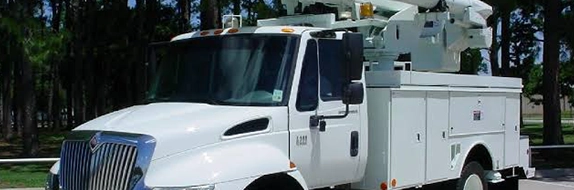
Bucket Truck Services
A bucket truck provides controlled elevated access when branches or upper canopy cannot be safely reached from the ground. Before using it, we check driveway width, ground conditions, overhead lines, and working clearance.

Skid Steer Services
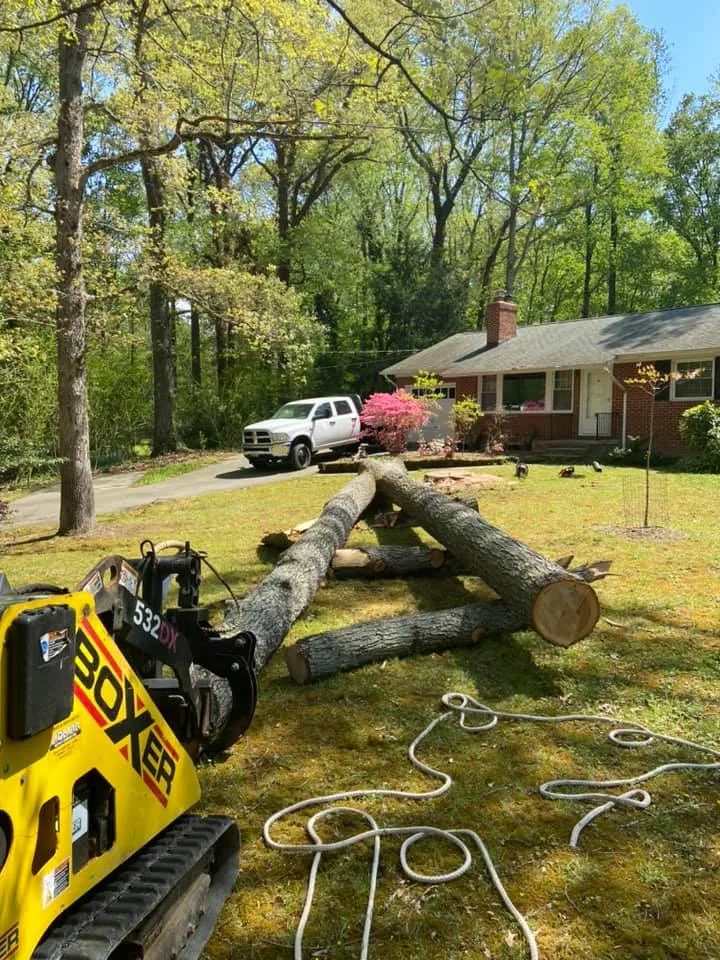
A skid steer can move logs, branches, chips, and soil more efficiently on larger jobs. We check gate width, pavement, ground softness, and the route between the work area and loading point before bringing equipment onto the property.

Crane Services
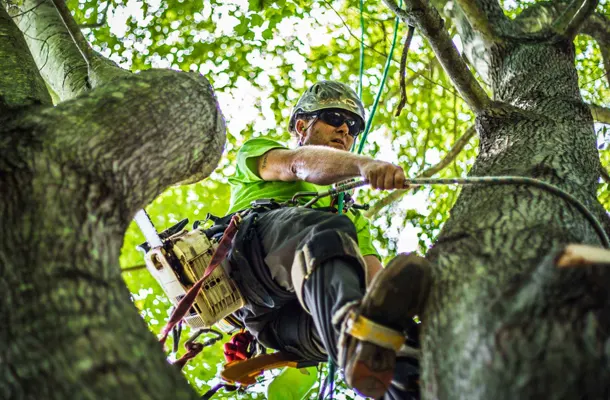
A large, unstable, or awkwardly positioned tree may require crane assistance when climbing or ground rigging alone cannot manage the work safely. Crane setup depends on stable ground, overhead clearance, road access, and enough working space.
Proudly Serving Leonardtown and Nearby Communities
Leonardtown, Hollywood, Callaway, Great Mills, Charlotte Hall, and Chaptico.
PROPERTY-BASED PLANNING
How We Plan Around the Rest of Your Property
Access
Gates, driveways, slopes, parking areas, and equipment routes are reviewed before the work plan is finalized.
Nearby Property
Homes, roofs, fences, sheds, vehicles, landscaping, and neighboring spaces are considered.
Work-Zone Setup
The crew identifies branch-control space, equipment position, and the debris route before cutting.
Cleanup Scope
The estimate explains which branches, logs, chips, and other material are included.
STORM SAFETY
Tree Down or Leaning After a Storm?
If it is touching a power line, stop. Do not approach, cut, or move it. Keep people and pets clear and contact the utility company or emergency services first.
If it is clear of power lines but blocking a driveway, resting on a structure, or leaning toward one, reach out. Storm response is prioritized according to the seriousness of the hazard and current conditions across the area.
BEFORE YOU CALL
Information That Helps Us Quote More Accurately
A few details can help us understand the situation faster and decide whether photos are enough to begin or an on-site visit is needed.
- ✓ A couple of photos taken from a distance and up close
- ✓ Roughly how far the tree is from the house, fence, driveway, or parking area
- ✓ Whether you have noticed leaning, cracking, dead branches, or storm damage
- ✓ Whether the property is part of an HOA or managed community
- ✓ Your general location in Waldorf or the surrounding area
HAZARDOUS RESIDENTIAL TREE REMOVAL
How We Plan a Hazardous Residential Tree Removal
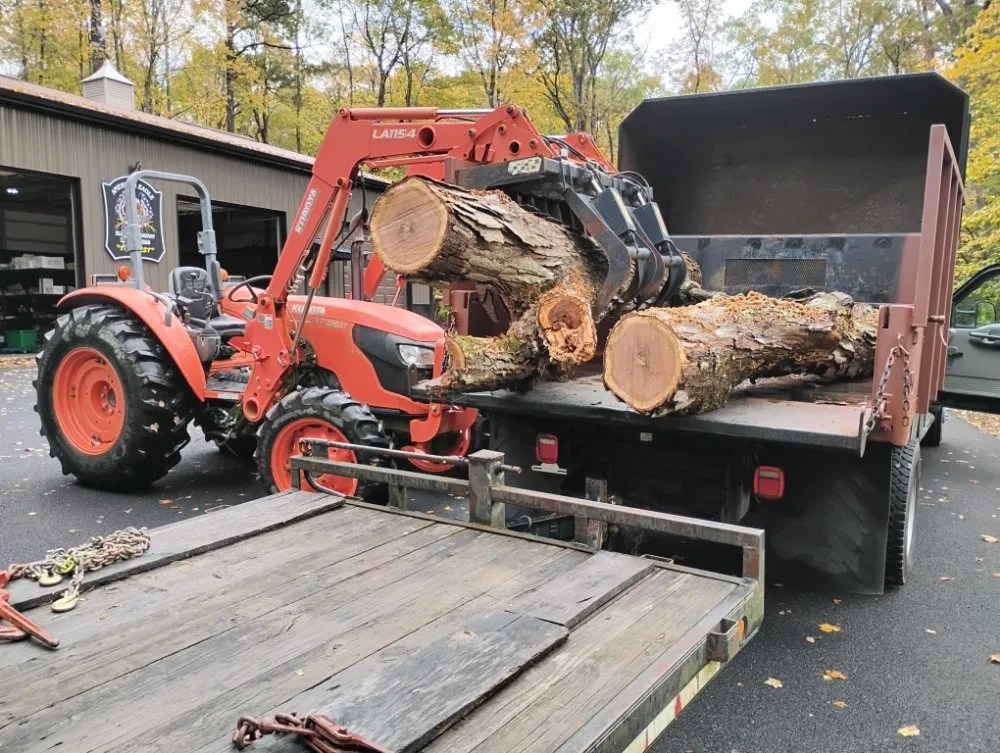
When a homeowner reaches out about a tree that appears dead, damaged, or unstable, we begin by reviewing photos or visiting the property. The crew checks trunk and branch condition, signs of decay, distance from the home, driveway, or fence line, and the amount of safe working room available.
If removal is the right call, the sequence is planned so the tree can be taken down in controlled sections. The agreed cleanup is completed, and the site is reviewed with the homeowner before the crew leaves.
WHAT DRIVES THE PRICE
What Affects Tree Service Pricing in Waldorf?
The most dependable estimate is based on the actual tree and worksite rather than a general number quoted sight unseen. Tree condition, access, nearby structures, cleanup requirements, and urgency all affect the final scope.
Tree Size & Condition
Larger, less stable trees generally require more time, planning, and equipment.
Access
Fenced yards, tight lots, slopes, and landscaping affect which equipment can reach the tree.
What’s Nearby
Roofs, fences, power lines, parking areas, and active entrances change how the work is staged.
Debris Volume
More branches, logs, chips, and hauling requirements increase labor and disposal needs.
Urgency
Active hazards may require priority scheduling and a different work plan.
HOW IT WORKS
Tree Service Process From First Call To Final Cleanup
1
Reach out
A call, a form, or a few photos all work.
2
We review the concern
We schedule a visit or review your photos.
3
We inspect the site
We check the tree, surroundings, and access.
4
We explain realistic options
Not just the most expensive one.
5
You receive a written estimate
Clear, itemized, and based on the actual work.
6
We schedule approved work
Timing and scope are confirmed.
7
We clean and walk the site
The completed area is reviewed before we leave.
Tree Service Across Waldorf and Nearby Communities
Serving Waldorf, White Plains, La Plata, Accokeek, Brandywine, Hughesville, and surrounding Southern Maryland areas.
WALDORF FAQ
Common Questions About Tree Service in Waldorf
GET A CLEAR ANSWER ABOUT YOUR TREE
Let’s Get This Sorted Out
Tell us what’s going on, and we’ll help you figure out the right next step.